Bond yields have recently faced pressure as investors look again at inflation interest rates, crude oil prices and how the world is borrowing money. In India the main 10-year government bond yield has gotten close to the key 7% mark. This increase is important because bond yields affect returns, for fixed-income investments the cost of borrowing how stock prices are valued and the whole financial situation.
Understanding Bond Yields
A bond yield shows the return that investors demand from a bond. Bond prices and bond yields usually move in directions. When investors sell bonds, bond prices fall and bond yields rise. Conversely, when demand for bonds increases, bond prices rise and bond yields fall. Therefore rising bond yields mean that investors are demanding returns to cover inflation interest rate changes and other market risks. For people who already own bonds rising bond yields can lower the market value of those bonds especially if the bonds have duration.
Why Are Bond Yields Rising?
One of the reasons behind the recent rise is increasing concern over crude oil prices and inflation. Higher crude oil prices can increase transportation, manufacturing and logistics costs. Since India is heavily dependent on imported oil a sustained increase in oil prices can put pressure on domestic inflation and the country external balances.
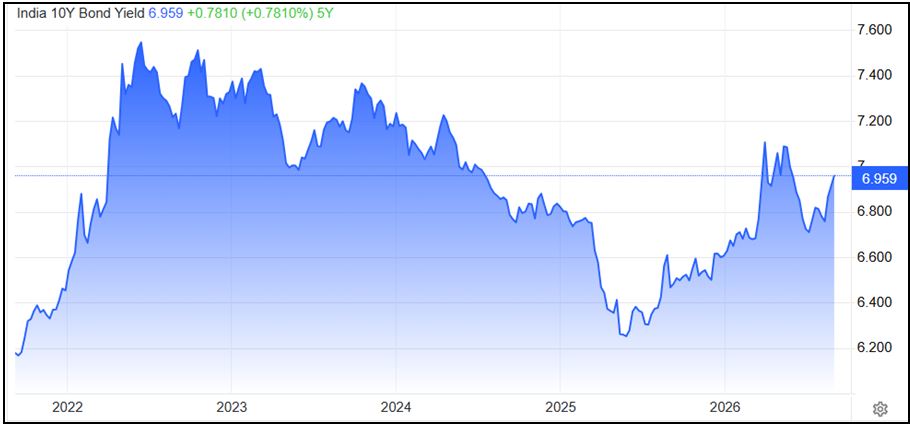
Global bond markets are also witnessing yields. U.S. Treasury yields have moved higher while yields in major economies have also increased. Since global investors compare returns across markets, higher yields, in developed economies can reduce the attractiveness of emerging market debt unless Indian bonds offer sufficient compensation.
Inflation and Interest Rate Expectations
Inflation is one of the important factors that influence bond yields. I notice that when investors expect inflation to remain high investors demand bond yields because inflation lowers the buying power of future interest payments. Interest rate expectations are equally important. Even if the Reserve Bank of India does not change the repo rate away bond markets respond to expectations, about future monetary policy. If investors think that inflationary pressures could keep rate cuts from happening or might need policy investors may cut their holdings of longer duration bonds, which pushes bond yields higher.
Impact of Global Bond Yields
The Indian bond market does not work alone. It is connected to financial markets. When U.S. Treasury yields go up it affects how investors view dollar-denominated assets. These assets can look more appealing to investors when U.S. Yields rise. This shift in preference can change how money flows into emerging markets like India. As global yields increase it becomes harder for Indian debt securities to attract investors. That’s because foreign investors will demand returns to compensate for the risk. At the time rising yields can weaken local currencies. This adds pressure, on the rupee and influences the overall stability of the bond market.
What Does Rising Yields Mean for Bond Investors?
For investors when interest rates go up it can be both a problem and a chance. People who already own bonds might lose money because the value of their bonds usually goes down when interest rates rise. This effect is especially big with bonds that have a time until they mature.
When interest rates go up it can be good for new people who are buying bonds because the new bonds they buy can offer better returns in the future. People who own high-quality bonds and keep them until they mature can also avoid the effects of short-term changes in prices long as they are okay with the risks that come with the bonds credit quality and how easy it is to sell.
Bonds that have a time until they mature are not as affected by changes in interest rates as bonds that have a long time until they mature. So people who are worried about changes, in interest rates might want to watch how long their bonds are instead of taking too much risk from interest rate changes.
Impact on Equity Markets
Rising bond yields can also have an impact on stock markets. Government bonds are seen as investments so when their yields go up investors might want higher returns from stocks to make up for the extra risk they are taking.
Higher yields can also lead to a discount rate when calculating the value of future company earnings. This can create pressure on stock valuations for fast-growing companies that have high valuations because their cash flows are expected further out in the future. Companies that have balance sheets good cash flows and fair valuations might be in a better position, during this kind of situation.
Impact on Borrowing Costs
Higher bond yields can lead to borrowing costs throughout the economy. Government securities play a role as a reference point for other types of debt. When yields on government bonds go up companies often end up paying more in interest when they issue their bonds to raise money.
This increase in financing costs can affect how much companies are willing to invest. It may slow down spending on projects limit infrastructure development and reduce plans for business growth. Depending on how monetary policy moves through the economy regular people might also see interest rates, on loans. This could mean expensive mortgages, car loans or credit card payments.
What Should Investors Watch?
Investors should keep an eye on several things to see where bond yields might head next. These things include crude oil prices, inflation numbers, RBI policy signals, U.S. Treasury yields, decisions by banks around the world how much money the government needs to borrow and the flow of foreign investment. If oil prices or global yields keep climbing they could keep pressure, on bonds. But if inflation eases crude prices fall and people expect the bank to cut rates bond prices could. Bond yields could fall.
Conclusion
The recent increase in bond yields shows a mix of local factors like higher crude oil prices worries about inflation higher global yields, more government borrowing and changes in expectations about interest rates. For investors, higher bond yields do not always mean negative news. While they can create short-term challenges for existing bondholders, they may also present better opportunities to invest in new fixed-income securities at more attractive yields.
The main thing is to know about duration, interest-rate risk, credit quality and how long you plan to hold your investments before making a choice. As the standard 10-year government bond yield gets to 7 percent bond markets have once again become an important sign of the overall investment situation. For investors paying attention to inflation RBI policy and movements, in global bond markets will be important when dealing with the changing world of fixed-income investments