Indias economy recorded GDP growth of 7.8 percent in the first quarter of FY27 covering April to June 2026. India’s economy shows a figure than the 6.9 percent growth recorded in the same quarter a year earlier and India’s economy demonstrates that economic activity remained strong despite global uncertainty, high energy prices and changing financial conditions. According to the estimates real GDP increased to around ₹81.36 lakh crore in Q1 FY27 from ₹75.46 lakh crore, in Q1 FY26. Nominal GDP grew by 10.3 percent while real Gross Value Added (GVA) expanded by 8.2 percent.
The 7.8% growth rate matters because it shows the sign of how the Indian economy began in FY27. One important part of the data was the role played by manufacturing, services, investment and local spending. Manufacturing continued to be a source of growth. At the time construction and many service industries also helped the economy grow. This means that the growth did not come from one area of the economy.
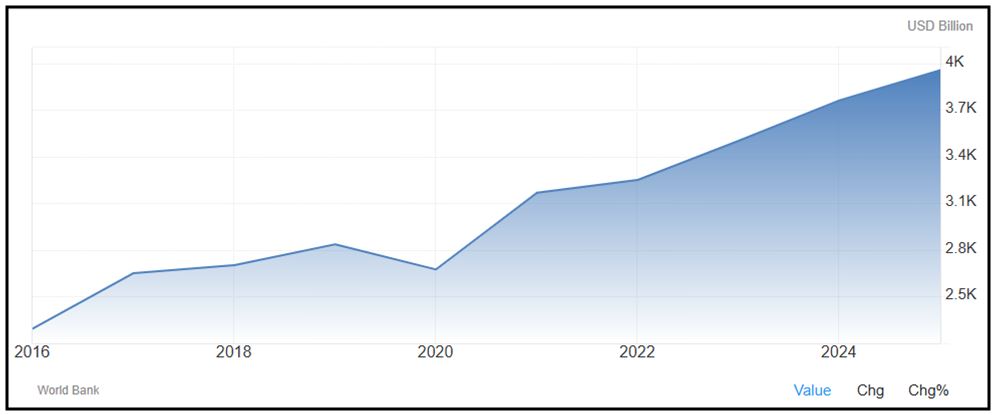
Consumption was still important for the economy. Private consumption makes up a part of Indias economic activity. Stable job conditions, rising income, demand from areas and spending, in cities can affect how long the growth lasts. When consumption and investment grow at the time economic expansion can be wider and more balanced.
Investment and capital formation are also signs of how strong an economy is. Government spending on capital has helped build roads, bridges and other infrastructure. Meanwhile private companies have slowly raised their spending in fields such, as manufacturing, infrastructure, technology. Expanding their capacity. More investment can boost productivity. Build extra economic capacity. However how long private investment lasts will depend on demand conditions the cost of financing and the confidence of businesses.
Why Was the 7.8% GDP Figure Questioned?
Despite the headline number the 7.8% GDP estimate caused public and market debate. Some economists and commentators asked whether the new GDP series and its methodology fully showed changes in the economy. The conversation focused on the revised base year, data revisions and the way price changes are shown through the GDP deflator. Some critics also asked questions about the link between GDP growth and other economic indicators. These questions do not prove that the GDP number is fake or wrong. They show a debate about methods, measurements and how things are understood. India’s statistical authorities, including the Ministry of Statistics and Programme Implementation (MoSPI) supported the estimates. Explained the method used to calculate the new series. The official view is that the estimates follow the statistical framework and the available source data. One area that got attention was the GDP deflator because changes in prices can affect the calculation of GDP. The debate should therefore be looked at carefully and along, with GVA, industrial production, consumption, investment, employment and credit of seeing one number as the whole picture of the economy.
For the finance industry better economic activity can help with loan requests and better business situations. Banks and other lenders could do better when companies spend money and when people spend more.. The growth of loans needs to stay good and the quality of assets should be watched carefully as the economy changes. For people who invest in stocks stronger economic growth can create an environment but the prices of stocks and the earnings of individual companies still decide how well each stock does.
The makeup of growth also plays a role. If manufacturing and investment keep growing along with consumption and services the economy can build a foundation. This can help companies expand their capabilities and hire people.. The numbers for each quarter can shift because of updates and short-term changes in different areas. The coming months will be key, to figuring out if the first quarter shows a lasting pattern.
Another big question is if the 7.8% growth rate can keep going. Quarterly numbers can be affected by all kinds of term and long-term things. Also later updates to the data may change what we first thought. Whether growth lasts will depend on investment, consumer spending, government spending on capital projects, productivity, jobs and how well key industries are doing. Better infrastructure and more manufacturing capacity can help growth, over time.. Only if there’s steady demand to support it.
Inflation and money conditions will also affect how the economy grows. If inflation stays under control families can keep their buying power and companies can make plans for investments easily. At the time changes, in world interest rates oil prices and how financial markets behave can change how much it costs to borrow money and where money moves. A steady economic environment would help businesses keep growing.
External risks continue to be important for India. Higher prices for oil can raise the cost of imports and create pressure on inflation and the current account. Global trade conditions, geopolitical tensions and changes in currencies can also impact exporters, importers and the feelings of investors. Therefore with strong growth inside the country decision makers will have to find a balance, between growing the economy and keeping prices stable and the external sector stable.
The quality of growth is therefore just as important, as the number that appears on the surface. Investors and policymakers should not focus on one quarterly figure. They need to check if the growth is creating investment, jobs, income and long-lasting company profits. A high GDP growth rate means more when it is backed by ranging economic activity.
Conclusion
India’s 7.8 percent real GDP growth in Q1 FY27 shows that India’s economy started the year on a strong note. India’s 7.8 percent real GDP growth was helped by manufacturing, services, investment and domestic demand all of which pushed India’s economy forward even when the global environment was tough. India’s 7.8 percent real GDP growth is sometimes questioned because of the debate over GDP methodology. Questions about the series changes to the base year, revisions and the GDP deflator deserve careful examination but they do not automatically prove that the data are wrong. For investors the best approach is to follow India’s 7.8 percent real GDP growth with GVA, industrial production, consumption, investment, credit, inflation, employment and corporate earnings. If these indicators keep showing improvement India’s 7.8 percent real GDP growth could become more lasting. Still risks from oil, global interest rates, geopolitical developments and currency movements are important to keep in mind. In short the 7.8 percent figure is an economic signal but understanding the mix, quality and sustainability of that growth is essential, for a full view of India’s economic outlook today.